Roofing
Roof Leak Repair in Greer, SC: What to Do Before Help Arrives
Water inside the house is a timer, not a stain. Do these things now to limit damage before the crew arrives.
September 17, 2026 · 8 min read
Greer gets hit hard every summer. Those fast-moving afternoon storms can drop two inches of rain in under an hour, and your roof takes all of it. If water is getting in right now, the next few hours matter. Our Greenville-based team at American Siding & Construction LLC regularly serves Greer homeowners and knows the specific subdivisions and building vintages common to the area. We have handled roof leak repair across Greer and the Upstate for years, and we know exactly where these roofs fail first. This guide walks you through what to do before our crew arrives so you limit the damage and know what to expect.
Water inside your home won't wait. Get our team on it today.
Request Emergency RepairCall (864) 505-4491Key Takeaways
- Greer's intense summer storms are a leading cause of sudden roof leaks in Greenville County homes.
- Many Greer subdivisions built in the late 1990s now have shingles at or near end-of-life in 2026.
- Flashing failures and pipe boot seams are the most common entry points for roof leak repair calls we receive.
- Containing water damage quickly inside your home can prevent a roof repair from turning into a full interior restoration.
- A proper inspection after any storm should check valleys, flashing points, and ridge lines, not just visible shingle damage.
A Ceiling Stain Is a Timer, Not a Blemish
One minute the sky is clear, and the next you've got water spreading across your ceiling in a stain the size of a dinner plate. That stain is not a cosmetic problem. It's a timer.
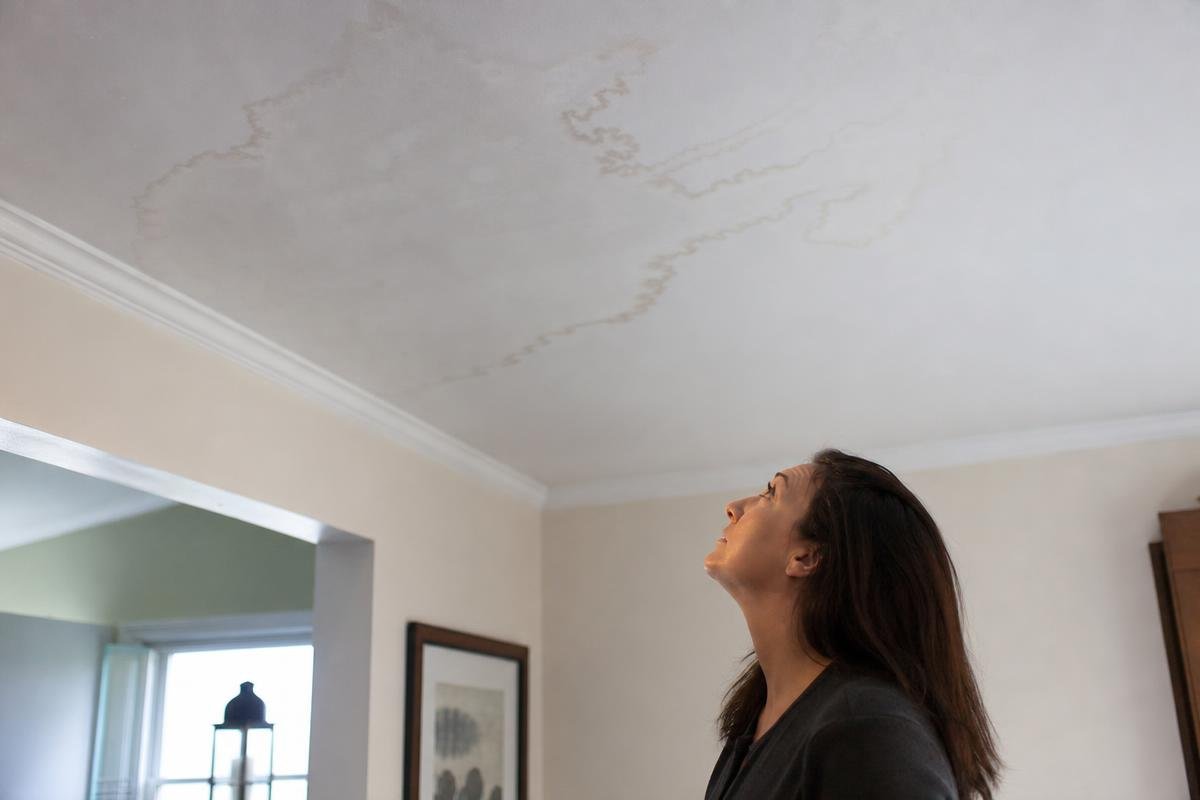
Water moves fast once it's inside. It soaks insulation, softens decking, and feeds mold before you ever smell it. A leak that looks minor on Tuesday can mean rotted sheathing by Friday.
This article covers two things. First, the emergency steps you can take right now to limit damage before a crew gets there. Second, the most common reasons roofs in this part of South Carolina start leaking in the first place. American Siding & Construction handles roof leak repair across Greer and surrounding communities, including Taylors, Lyman, and the broader Upstate.
Why Greer Roofs Leak More Than You'd Expect
The Local Climate Does More Damage Than Most Homeowners Realize
Greenville County averages roughly 50 inches of rain a year. That's more than Seattle gets, and it falls harder here. Summer convective storms concentrate that volume into short, violent bursts that don't forgive weak flashing or worn shingles.
Then winter shows up. Greer sees three to five freeze-thaw cycles every January and February. Water sneaks into a hairline crack in your flashing caulk, freezes overnight, and pries that seam open a little wider. By spring, you've got a leak that wasn't there in November.
Long summers make it worse. UV exposure in Zone 7b/8a is no joke. Asphalt shingles, especially 3-tab, start losing granules and going brittle by year 12 to 15 in this climate. If your home went up in the late 1990s or early 2000s, those original shingles are at or past end-of-life right now. That's worth knowing before the next storm hits.
The Five Most Common Leak Sources on Greer-Area Homes
We've been on enough roofs in Taylors, Lyman, and throughout the Upstate to know where the failures start. It's almost always one of these five spots.
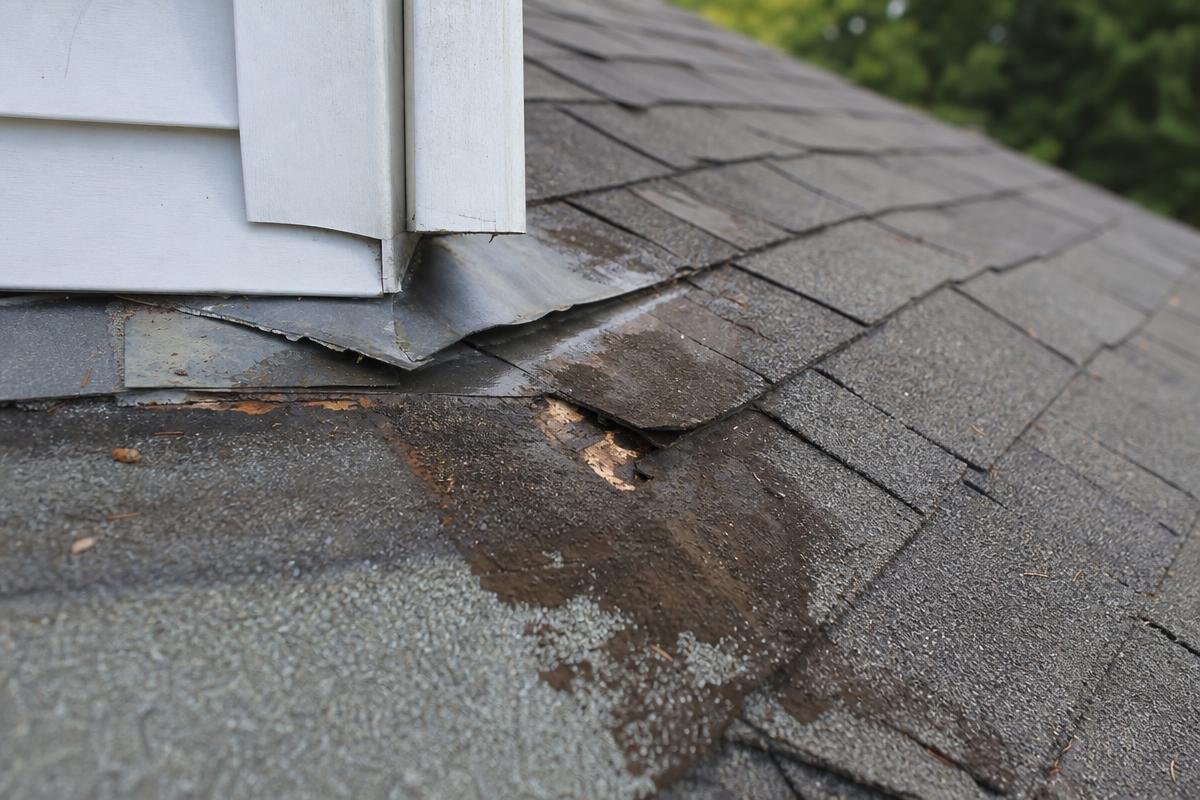
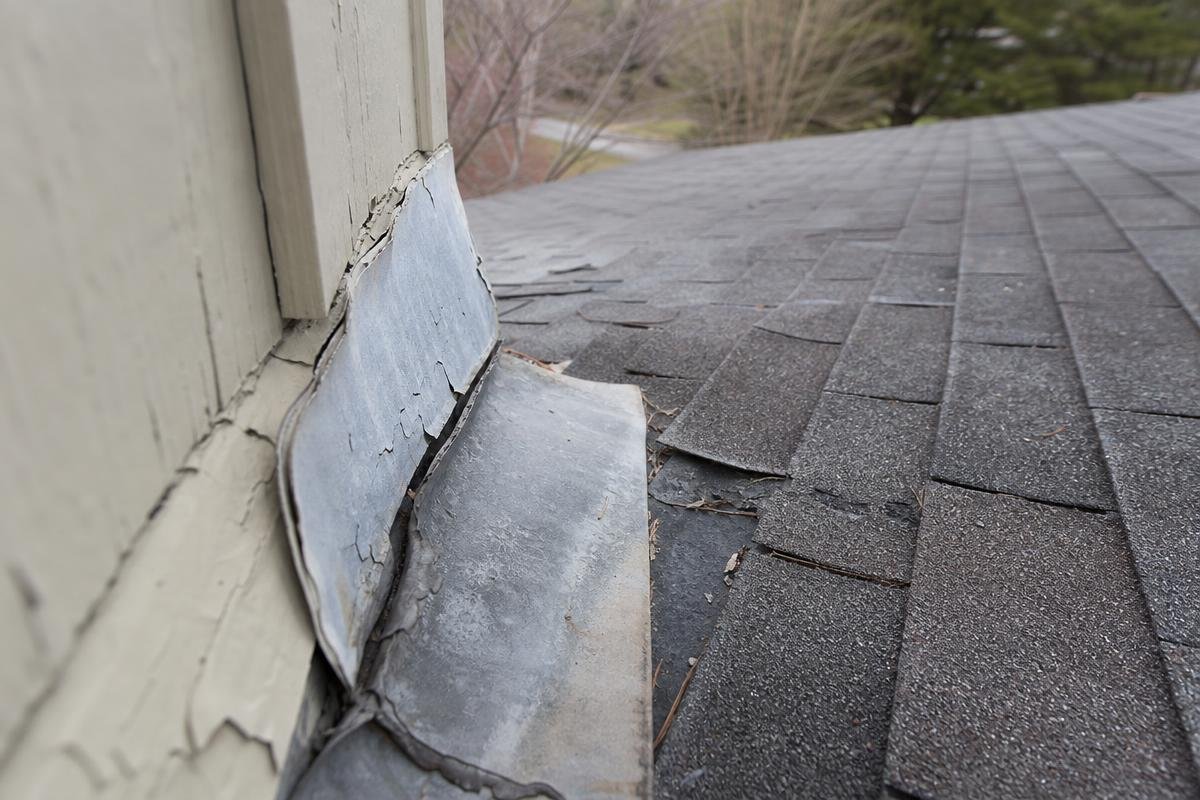
- Flashing at chimneys, skylights, and roof-to-wall transitions. Caulk cracks, metal lifts, water finds the gap. Roof flashing repair is the fix we make most often.
- Pipe boot deterioration. Rubber boots around plumbing vents dry out and split. Easy to miss from the ground, but a reliable leak source.
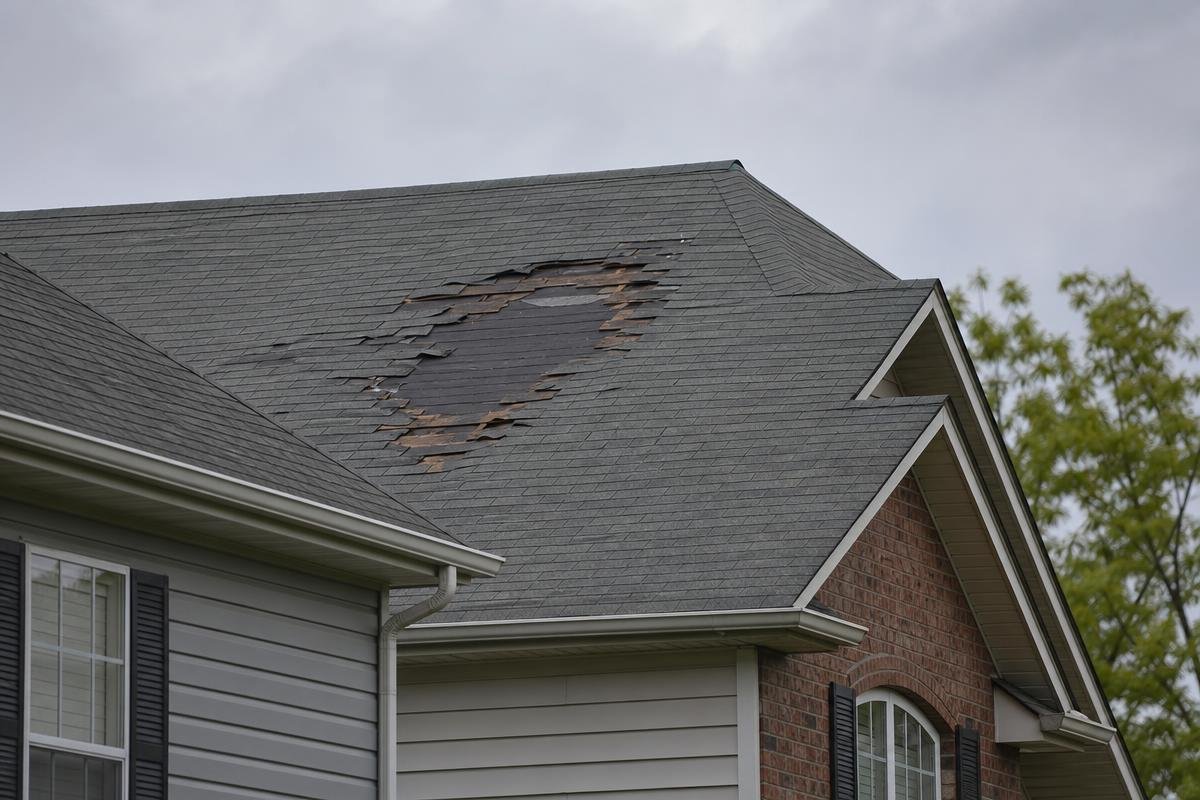
- Storm debris shingle damage. Branches, hail, and wind-lifted shingles open the deck to water fast. We see a spike in storm damage repair calls every spring and fall.
- Valley leaks on pre-2005 homes. Many older subdivisions were built without proper ice-and-water shield in the valleys. Debris from mature tree canopy, especially in dense neighborhoods like Brushy Creek and along the Pelham Road corridor, packs into those valleys and holds moisture against the deck.
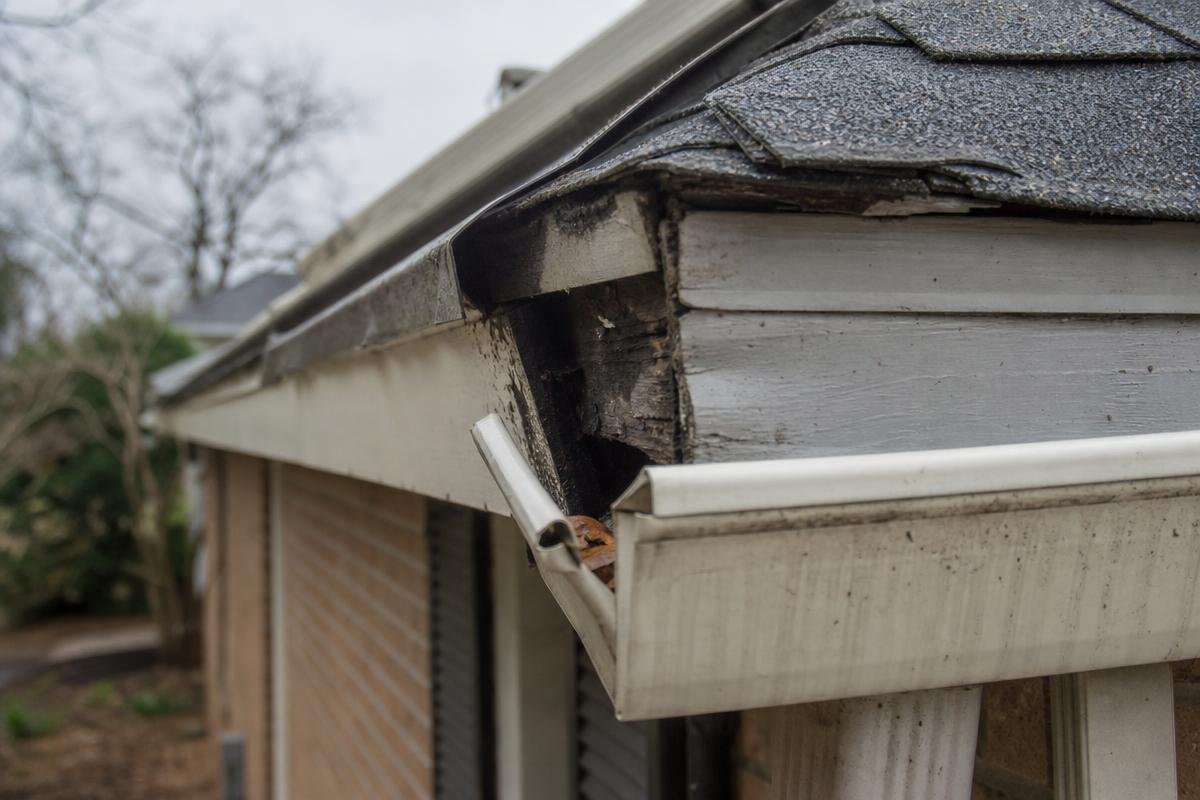
- Soffit and fascia rot wicking back under drip edge. Rot at the roofline pulls water inward. Most homeowners don't connect soffit damage to interior ceiling stains, but we do.
Roof leak causes here aren't random. They follow a pattern. If you want to see how we handle these repairs, take a look at our roofing and exterior services.
The 5-Step Emergency Response: Limit Damage Before the Crew Arrives
An emergency roof leak doesn't wait for a dry forecast. When water finds a gap during a hard Upstate downpour, it moves fast. Here's what to do right now while you wait for help.
How Do You Find Where a Roof Is Actually Leaking?
Check your attic first, because the ceiling stain is almost never directly below the entry point. Water travels along rafters and roof decking before it drips. Grab a flashlight and look for wet insulation, water trails on rafters, or daylight peeking through.
That's your real leak location. Mark it so the crew knows exactly where to inspect.
Step 2: Contain the Water and Protect Your Belongings
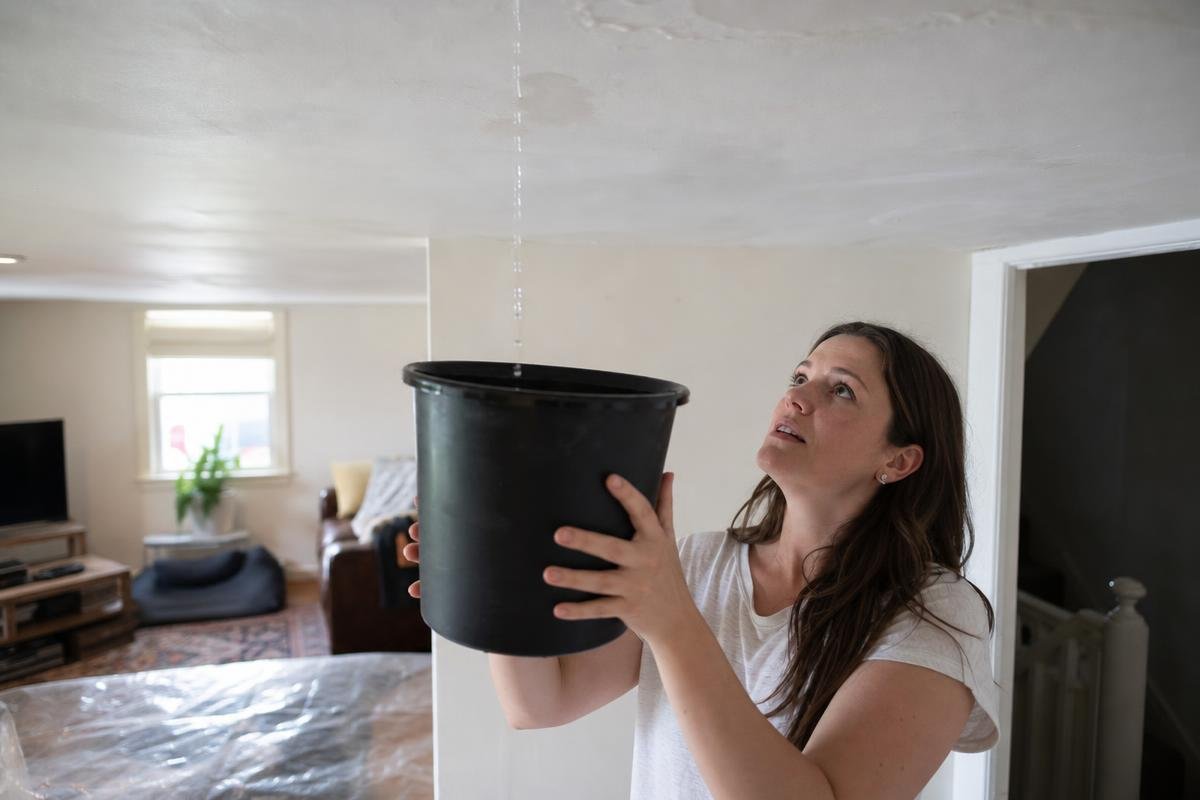
Set buckets under active drips. Lay towels on hardwood or laminate flooring to prevent warping. Move electronics, furniture, and anything irreplaceable away from the wet zone immediately. Plastic sheeting spread across the floor under the drip area buys you time.
Step 3: Deal With a Ceiling Bulge the Right Way
A bulging ceiling means water is pooling above the drywall. That's a collapse waiting to happen. Take a screwdriver or awl and puncture the lowest point of the bulge. Yes, intentionally. A controlled release is far better than a sudden drywall blowout that soaks everything in the room.
Put a bucket directly below before you puncture it.
Should You Tarp a Leaking Roof Yourself?
Only if the roof is dry, low-pitch, and safe to stand on. A 6-mil polyethylene tarp draped over the affected area can slow water intrusion. Roofing cement like Henry 208, applied with a caulk gun, can temporarily seal a visible crack at a flashing point or pipe boot.
Do not walk a wet or steep roof. Seriously. We see injuries every year from homeowners in Lyman and Taylors attempting this. Call a professional for anything steep or slick. Our roofing and exterior repair services include emergency response, so one call gets the right people on it.
Step 5: Document Everything for Your Insurance Claim
Before you clean up a single thing, photograph everything. Exterior damage. Interior stains. Affected personal property. Your insurance adjuster needs this documentation, and once you start mopping up, that evidence is gone.
Video works too. Walk the room, narrate what you're seeing, timestamp it. That footage protects you when the claim gets filed. Reach out to schedule your inspection as soon as the storm passes so we can support your claim with a written assessment.
How to Tell If You Need a Repair or a Full Replacement
One leak does not mean you need a new roof. But some leaks are a sign that the roof has run its course. Knowing the difference saves you money either way.
Many homes in Simpsonville, Taylors, and Lyman that were built during the late 1990s and early 2000s boom are now sitting on 20 to 25-year-old shingles. That puts a lot of original roofs right at end-of-life in 2026. If that sounds like your house, the age alone is worth factoring in.
Signs the Leak Is Repairable
- Single-point failure: one pipe boot, one section of step flashing, a handful of lifted shingles
- Roof is under 15 years old with no widespread granule loss
- Deck boards feel solid, no soft spots when you walk the attic
- Leak is isolated to one slope or one penetration
- Wet insulation confined to one zone of the attic
These are fixable problems. A targeted storm damage roof repair handles them without tearing off the whole roof.
Red Flags That Point Toward Replacement
- Multiple leak points across different slopes
- Shingles curling, brittle, or missing granules across more than 25 to 30 percent of the surface
- Widespread deck rot or plywood delamination
- Water staining in more than one room
- Roof is 20-plus years old with repeated prior repairs
- Moss or algae across large sections, a sign of chronic moisture retention
When you stack three or four of those together, repair stops making financial sense. You can see our completed roofing projects to get a sense of what both outcomes look like in the field.
We will always tell you straight. Not every roof leak repair turns into a replacement. But some do, and you deserve to know that before we start.
Not sure if you need a patch or a new roof? Schedule a free storm damage inspection and get an honest answer, not a sales pitch.
Book a Free InspectionStorm Damage, Flashing Failures, and the Leaks Homeowners Miss
What to Look for After a Storm
You don't need to climb on the roof to get a read on storm damage. Start from the ground. Walk the perimeter and look for shingle gaps that show as lighter-colored patches against the darker field of your roof. Check your gutters and downspout splash blocks for granule buildup. That coarse gray sand is your shingles telling you they took a hit. Dented metal vents, creased ridge cap, or bent drip edge are all signs worth noting. Hail leaves circular dents on AC condenser fins and gutters long before you spot damage on the shingles themselves.
Convective summer storms here expose every weak point fast. If you already know about pipe boots or shingle issues from earlier in this article, those are the first spots to recheck after a storm.
Why Flashing Fails and What a Proper Repair Involves
Counter-flashing at chimneys, step flashing along dormers, and valley flashing at roof intersections are the most common failure points we see on homes built in the late 1990s and early 2000s across Simpsonville, Taylors, and Lyman. That era of construction used galvanized steel flashing. By 2026, that steel is corroding. Freeze-thaw cycles in January and February crack the caulk at seams and open gaps wide enough to let water in with every hard rain.
A proper flashing repair means pulling the old material, inspecting the deck underneath for rot, and installing aluminum or lead-coated copper in its place. It's targeted work. It's affordable when caught early. Let it go until the deck rots and the scope changes completely. Our gutter and exterior repair services cover the full picture, not just the shingles on top.
The Gutter-Fascia-Soffit Chain Reaction
A clogged or sagging gutter doesn't just overflow. It backs water up under the drip edge. That water sits against the fascia board until the wood rots. Rotted fascia lets moisture wick into the soffit, then into the wall cavity or attic. What started as a gutter cleaning job becomes a multi-trade repair.
We handle gutters, fascia, and soffit as part of a single exterior engagement. One crew, one scope, one call. That's how you stop the chain reaction before it reaches your insulation.
Spotted storm damage or suspect a flashing failure? Call us at (864) 505-4491 and we'll get eyes on it before the next rain hits.
Schedule ServiceWhat Happens When the Crew Shows Up: The Inspection and Repair Process
You've done your part, buckets down, tarps up, water shut off if needed. Now it's our turn. Here's exactly what happens when we pull up to your driveway.
The Diagnostic Inspection
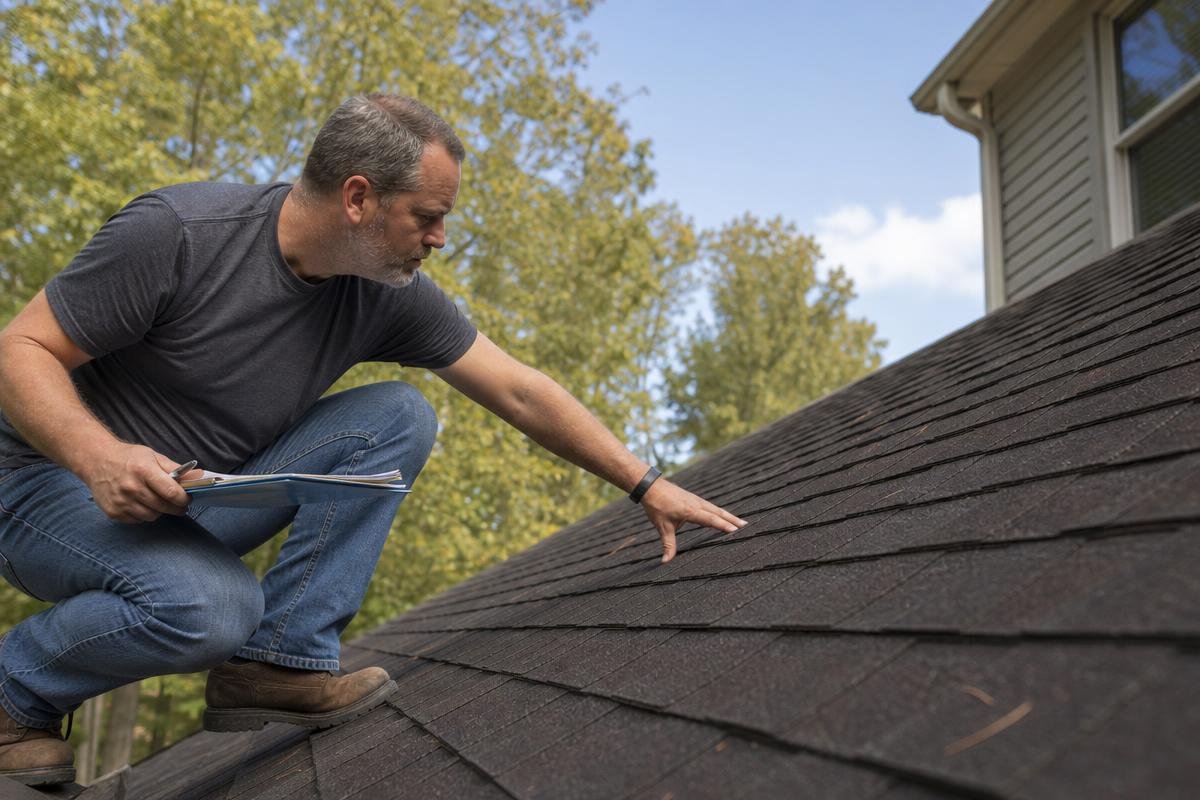
We start on the exterior. The crew walks the roof and checks every penetration point first: pipe boots, chimney flashing, step flashing along dormers, and valley seams. These are where leaks almost always start on homes across the Upstate, from Taylors to Lyman.
Then we go inside. The attic tells the real story. We trace the water path from where it entered the deck down to where it's showing up on your ceiling. Wet insulation, stained rafters, soft decking, we note all of it. A solid inspection takes 20 to 45 minutes and ends with a clear answer, not a guess.
The Repair Itself
Repair time depends on the cause. A pipe boot swap runs 30 to 60 minutes. Re-bedding and caulking counter-flashing at a chimney takes 1 to 3 hours. Replacing a section of step flashing and re-laying shingles is a 2 to 4 hour job. If we find rotted decking underneath, plan on a half day or more, that has to come out before anything else goes down.
We match materials to your existing roof as closely as possible. Same shingle profile, same color family. The repair shouldn't look like a patch job.
After the Work Is Done
Before we leave, we do a final interior walk. We confirm there are no active drips. We photograph the completed repair so you have a record. Then we walk you through what we found, what we fixed, and what to watch for during the next heavy rain.
That's the process. No mystery, no surprises. We are licensed and insured in South Carolina, and you can learn more about the American Siding & Construction team and why homeowners across the Upstate keep leaving five-star Google reviews after wanting straight answers and solid work.
Greer Homeowners: What Makes Roof Leaks Here Different
We've worked on roofs across the region for years. Taylors, Lyman, Wellford, and everywhere in between. But this area has a few specific conditions that make roof leaks more likely and more complicated than most homeowners expect. The climate section above covers the weather side of it. Here, we're talking about what's unique to the neighborhoods themselves.
Dense Tree Canopy and What It Does to Your Roof
Brushy Creek, Riverside, and the Pelham Road corridor all share one thing: big, mature trees growing close to the house. That canopy looks great. It's also a slow-motion problem for your roof.
Overhanging limbs drop leaves, pine needles, and small branches directly into your roof valleys and around your flashing points. That debris holds moisture. Moisture accelerates shingle breakdown and creates the exact conditions where roof leak causes stack up fast. During a storm, a limb doesn't have to fall to do damage. Whipping branches scrape granules off shingles on every pass.
The standard recommendation is six feet of clearance between any limb and your roof surface. Most homes in these neighborhoods don't have it. If yours doesn't, trimming those trees is one of the best things you can do before the next storm rolls through. Check out exterior services in Taylors, SC if you're in that corridor and want a roof inspection alongside your tree situation.
The Age of Greer's Housing Stock
A lot of subdivisions here went up fast in the late 1990s and early 2000s. Those homes are 22 to 26 years old now. Original 25-year architectural shingles are at or near the end of their rated life. A leak on a roof that age isn't just a single bad shingle. It's often the first sign the whole system is aging out.
If your home was built around 2001, a roof leak repair might buy you another season. Or it might be the conversation that leads to a full replacement. We'll tell you which one honestly when we inspect it.
Rapid Growth and Construction Shortcuts That Show Up Later
This area grew fast. Fast growth sometimes means flashing installed in a hurry, deck prep that wasn't done right, or pipe boots that were never properly sealed. Those shortcuts don't show up on day one. They show up 15 or 20 years later, right around now.
We've seen it on roofs across the region, including homes we service in Lyman, SC and nearby communities. If your home went up during a boom period, it's worth having someone step inspect the flashing and valleys before you have water coming through the ceiling.
Frequently Asked Questions
How much does roof leak repair cost in Greer?
Simple fixes like a pipe boot replacement or minor flashing repair typically run $150 to $500. Larger jobs, like valley re-flashing, deck board replacement, or a significant shingle section, usually land between $1,500 and $3,500. Full replacement is a separate conversation entirely. The only way to get an accurate number is a free on-site inspection. We tell you the exact scope and price before any work begins.
Can I repair a roof leak myself?
Tarping, puncturing a ceiling bulge to drain it, and clearing gutters are all reasonable. Actual repairs are not. Replacing flashing, re-laying shingles, or sealing penetrations requires safe roof access and real diagnostic knowledge. Improper repairs can also void your manufacturer's shingle warranty.
How fast does water damage spread after a roof leak?
Faster than most people expect. Wet insulation loses R-value within hours. Drywall softens and mold can begin within 24 to 48 hours of sustained moisture. Wood decking and framing can show rot within a week of repeated wetting. An emergency roof leak is not something to watch and wait on.
Will my homeowner's insurance cover a roof leak?
Sudden and accidental damage from storms, hail, or wind is typically covered. Gradual deterioration and maintenance neglect usually are not. Document everything before permanent repairs start. We can provide documentation to support your claim.
How do I know if it's a roof leak or condensation?
Condensation appears in cold weather, is diffuse with no single drip point, and ties to poor attic ventilation. A roof leak shows up during or after rain, has a traceable water trail in the attic, and connects to a specific damaged area or penetration. Homes in Simpsonville and Taylors with older attic ventilation see both. Knowing which one you have matters before any repair starts.
What else does the crew handle besides the roof itself?
Quite a bit. Our team covers gutters, fascia, soffit, and siding as part of the same visit. We also handle interior drywall and paint repair from water damage. One call, one crew. See the full range of what we do on our roofing and exterior services page.
A roof leak does not get smaller on its own. If you spotted a stain after the last storm, or if your home was built in the early 2000s and has never had a roof inspection, now is the right time to get eyes on it. Call us at (864) 505-4491 or reach out to schedule your inspection. We will tell you exactly what we find and exactly what it will take to fix it, before any work begins.
Ready to Get Started with American Siding & Construction LLC?
Call (864) 505-4491 to speak with our team directly. We're ready to answer your questions, walk you through your options, and help you find the right solution for your needs. Whether you're just starting to plan or ready to move forward, we'll make the process simple and stress-free.
Thinking about a project like this?
Get a free estimate